


Will You Still Need Glasses After Cataract Surgery?

MBBS (S'pore), MRCSEd (Ophth, UK), MMed (Ophth, S'pore), FRCSEd (Ophth, UK), FAMS (Ophth, S'pore)

It is easy to assume that having a cataract removed means you will no longer need glasses. In reality, clearer vision after treatment does not necessarily mean clear vision at every distance without spectacles.
The artificial lens placed in your eye has an important role in what you can see clearly afterwards. Different lenses provide different ranges of focus, while your eye health and visual priorities can also affect the result.
Knowing where glasses may still fit into your daily life can help you set more realistic expectations before treatment.
Why Do Some People Still Need Glasses After Cataract Surgery?
During cataract surgery, the cloudy natural lens is removed and replaced with an artificial intraocular lens (IOL).
An IOL can be selected to focus vision at particular distances, but it does not necessarily give you clear vision at every distance without glasses.
Reading vision is one common example. If your lens is selected mainly for long-distance vision, you may be able to see road signs or watch television without glasses while still needing them for close-up tasks such as reading.
Intermediate tasks such as prolonged computer work may also require spectacles, depending on the range of focus provided by the lens.
Needing glasses for certain activities does not necessarily mean that something has gone wrong with the procedure. Instead, it may reflect the range of focus provided by the lens and the visual target planned before surgery.
How Does Cataract Lens Choice Affect Your Need for Glasses?
The type of IOL used can influence the range of distances you may be able to see clearly without spectacles.
Monofocal Lenses
A monofocal lens provides one main point of focus. When it is set for distance vision, reading glasses are often still needed for close work and may also be useful for intermediate activities such as computer use.
For someone who is comfortable wearing glasses for near tasks, a monofocal lens may still meet their visual priorities.
Lenses Designed for a Wider Range of Vision
Multifocal, trifocal and extended depth of focus (EDOF) lenses are designed to provide a wider range of vision across different distances. Depending on the lens and the individual, this may reduce reliance on glasses across more than one viewing distance.
However, reduced spectacle dependence is different from guaranteeing that glasses will never be needed. Fine print or detailed close work may still be easier with reading glasses.
Some lens designs may also be associated with visual effects such as glare or halos. This is one reason lenses designed to provide a wider range of vision may not be suitable for every patient.
Your ophthalmologist can assess which intraocular lens options may be suitable for your eyes and the vision you hope to achieve after surgery.
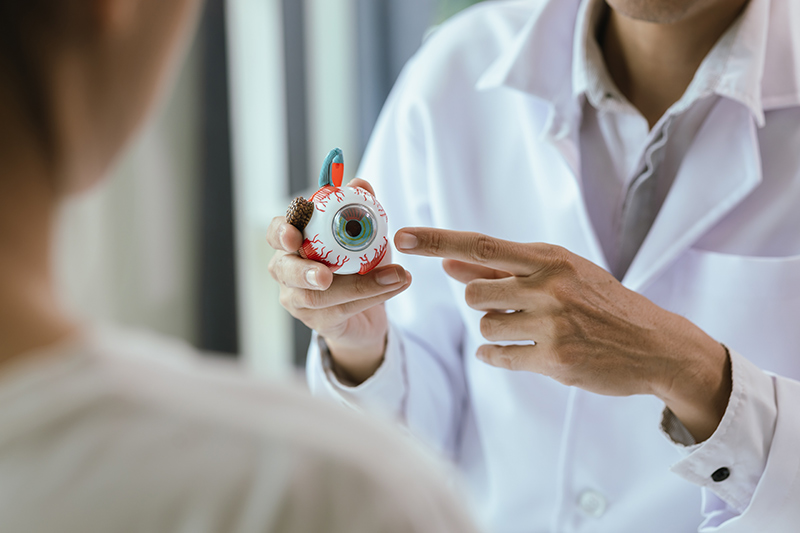
What Vision Changes Can You Realistically Expect After Cataract Surgery?
Rather than expecting to eliminate glasses altogether, it may be more useful to consider which activities you would most like to manage without them. The amount of spectacle independence achieved can vary even when a lens has been selected with that goal in mind.
The health of other parts of the eye also matters. Conditions affecting the retina, cornea or optic nerve can influence the vision achieved after the cataract has been removed.
Cataract lens selection therefore involves considering what a particular IOL may realistically provide in the context of your eyes. Discussing the visual tasks that matter most to you before surgery can help establish appropriate expectations for the result.
Understand Your Vision Options With Dr Leo Seo Wei
If reducing your reliance on glasses is important to you, it is worth discussing this before cataract surgery rather than assuming that any lens will provide the same result. The lens that suits you depends partly on the vision you hope to achieve after surgery, but also on what is suitable for your eyes. An assessment can help clarify which options are available and what level of spectacle independence may be realistic.
At our cataract clinic, patients can discuss their visual needs and available lens options as part of their cataract assessment. Dr Leo Seo Wei, senior consultant ophthalmologist, has experience in cataract management and cataract surgery.
If you are considering treatment and would like to understand how different lens options may affect your need for glasses, contact us to arrange an appointment.
FAQs About Cataract Surgery
Will my old glasses still work after cataract surgery?
They may not provide the same clarity because the prescription in the treated eye can change after the natural lens is replaced. This may be particularly noticeable while only one eye has been treated.
Can my glasses prescription change again later?
Your vision may fluctuate during recovery. If your vision changes after it has stabilised, it should be assessed rather than assumed to be a change in your glasses prescription.
Can astigmatism affect whether I still need glasses?
Yes. Astigmatism can influence vision after surgery. Toric IOLs are one option used to address certain types of astigmatism, although suitability depends on your eye measurements and overall visual needs.
Our Singapore Cataract Surgeon

Dr Leo Seo Wei
Senior Consultant Ophthalmologist
Dr Leo Seo Wei is a Senior Consultant Ophthalmologist in Singapore with over 20 years of experience in cataract treatment. Her career spans extensive practice and specialised training in Singapore and the United States, where she received numerous awards and valuable stints in ophthalmology.
Well recognised for her expertise in cataract, strabismus, myopia control and paediatric ophthalmology, Dr Leo has been invited to teach, speak and conduct live surgical demonstrations at international conferences and masterclasses across Asia-Pacific, Europe and the USA. She has also published numerous peer-reviewed articles, reflecting her commitment to advancing ophthalmic care and sharing knowledge worldwide.


#10-04 Mount Elizabeth Medical Centre, 3 Mount Elizabeth, Singapore 228510
Tel : +65 6737 8366
Emergency hotline: +65 9668 2229
Email : info@drleoeyespecialist.com


